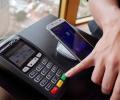
CPI(ML) Liberation general secretary Dipankar Bhattacharya has strongly criticised the newly introduced Merchant Discount Rate (MDR) on select UPI transactions, labelling it a "UPI tax" and demanding its immediate rollback. He drew parallels with demonetisation, arguing that the new framework would negatively impact small shopkeepers, MSMEs, and ordinary citizens by increasing prices.

The Kerala Legislative Assembly has passed a motion urging the central government to completely withdraw the proposed Merchant Discount Rate (MDR) on UPI transactions exceeding Rs 2,000. Chief Minister V D Satheesan and CPI MLA K Rajan highlighted concerns that the MDR would increase business costs, harm small businesses, and reduce the appeal of digital payments, while the BJP argued it would not affect general public or small merchants.

The Congress party has criticised the government's new 0.4% charge on UPI transactions above Rs 2,000 for merchants, terming it a "Modi tax". Opposition leaders, including Rahul Gandhi and Mallikarjun Kharge, allege that this move will ultimately burden consumers through price hikes and accuse the government of succumbing to American pressure to dilute India's zero-MDR policy. The government states the charge will support banks and fintechs.

UPI processed an average 802 million transactions a day in September, about 1 per cent more than the 792 million a day over the same period in August.

A Public Interest Litigation has been filed in the Supreme Court challenging the Centre's decision to impose a 0.4 per cent Merchant Discount Rate (MDR) on UPI person-to-merchant transactions exceeding Rs 2,000. The plea argues that the levy was introduced without adequate statutory safeguards, transparency, or public consultation, and questions its constitutional validity and potential adverse effects on merchants and consumers.
The All India Mobile Retailers Association (AIMRA) has announced a nationwide 'No UPI Day' protest on October 2 against the proposed 0.4 per cent Merchant Discount Rate (MDR) on UPI transactions exceeding Rs 2,000. Retailers argue that this charge will burden small businesses and impact their already thin profit margins, urging policymakers to withdraw the proposal.
The Congress party has questioned the Modi government's decision to defer the Merchant Discount Rate (MDR) on UPI transactions, alleging a potential "U-turn on the U-turn." Congress general secretary Jairam Ramesh highlighted previous denials by the finance minister regarding MDR imposition, only for it to be announced later and now deferred. He expressed concerns about future charges on UPI transactions.
Parliament was informed that UPI has onboarded 55.49 crore users by June 2026, with transactions reaching 24,162 crore in volume and Rs 314 lakh crore in value in FY 2025-26. The platform, operated by NPCI, is expanding internationally through NIPL, facilitating cross-border payments and assisting other nations in building similar systems. Significant efforts are also underway by the Government, RBI, and NPCI to enhance the security and transparency of UPI transactions, including risk-based limits, security frameworks, and public awareness campaigns against cyber-crime.

The Lok Sabha has passed a Bill to amend the Payment and Settlement Systems Act, 2007, authorising the government to permit banks and service providers to levy charges on UPI and other electronic payment modes. This move aims to create a sustainable revenue model for the digital payments ecosystem, shifting from the current exemption of UPI transactions from such charges.
The Congress party has criticised the government's recent notification regarding UPI transactions, alleging it paves the way for users to be charged fees, particularly for transactions above Rs 2,000. The party claims the government lacks transparency and questions if the move is to benefit American firms. The government, however, states that charges are necessary for the system's sustainability and infrastructure upgrades, with the Finance Minister clarifying that Merchant Discount Rate (MDR) applies to merchants, not customers.

National Payments Corporation of India (NPCI) on Wednesday said there is no charge for the bank account to bank account-based UPI payments or normal UPI payments.
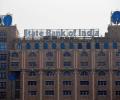
State Bank of India (SBI) anticipates that the newly introduced Merchant Discount Rate (MDR) on person-to-merchant (P2M) UPI transactions above 2,000, effective October 15, will enable it to recover the costs incurred in processing and facilitating these transactions, potentially even generating a small surplus.
Mobile payments pioneer Paytm reported significant growth in its UPI payments business for Q1 FY27, driven by app simplification, AI investments, and a focus on attracting Gen Z customers. The company saw a 45% year-on-year increase in Consumer UPI Gross Transaction Value and a rise of 60 lakh in Monthly Transacting Users, outpacing the industry. Paytm's strategy prioritises customer retention and product innovation, leading to a profitable quarter with strong revenue and EBITDA growth, further supported by AI-led operational efficiencies and an India-focused language model.

Can your money be protected against online frauds like hacking, digital arrests, etc?
The Indian government has mandated that banks and payment providers cannot levy charges on UPI transactions up to Rs 2,000 or on payments made via RuPay debit cards. This directive follows an amendment to the Payment and Settlement Systems Act, 2007, aiming to sustain and expand the digital payments ecosystem.
Samajwadi Party president Akhilesh Yadav has criticised the BJP government's proposed Merchant Discount Rate (MDR) on high-value UPI transactions, calling it a "chungi" (tax) on digital payments. He alleged the move was an attempt to extract money from people's transactions, contradicting the government's goal of a trillion-dollar economy. The new UPI framework will impose a 0.4% MDR on person-to-merchant transactions above Rs 2,000 from October 15, with certain sectors having a flat Rs 5 MDR.

Digital money is gradually starting to behave like software. It's no longer inert -- sitting passively in accounts. In the not-so-distant future, your money could become 'smart' and 'active,' understanding your preferences, paying your bills automatically, optimising your returns, and managing your risks -- all without you having to manage the details.

As India's biggest Unified Payments Interface (UPI) app PhonePe prepares to list, the updated draft red herring prospectus (DRHP) shows the impact of regulations on the business, and concentration of payments-linked revenue even as UPI lacks MDR (merchant discount rate).

Petrol pump dealers seek exemption from the proposed 5 UPI charge on fuel purchases above 2,000, citing pressure on their margins.

'Treating stock brokers as merchants for MDR is fundamentally misplaced.'
The NCP (SP) has demanded a complete rollback of the 0.4 per cent Merchant Discount Rate (MDR) on UPI transactions above Rs 2,000, effective October 15. The party termed the move a "direct assault" on small traders and shopkeepers, accusing the Modi government of "double standards" by burdening small merchants while large industrialists benefit from loan write-offs.
Users experienced difficulties with UPI payments due to technical issues in some banks' systems. NPCI stated that its systems are operational and it is working with banks to resolve the problems.

Prime Minister Narendra Modi has called upon the fintech industry to expand the global footprint of the Unified Payments Interface (UPI), advocating for its integration with international payment systems to reduce remittance costs for the Indian diaspora. Speaking at the Global Fintech Fest, Modi highlighted UPI's current presence in 11 countries and its connection with Singapore's local system, urging further expansion into nations with significant Indian populations or trade ties. He also stressed the need for India to set its own global payment standards and for the fintech sector to innovate beyond payments, focusing on cybersecurity, ethical data protection, and regulatory frameworks.
India's Unified Payments Interface (UPI) recorded an unprecedented 24.51 billion transactions valued at Rs 29.8 lakh crore in August, largely propelled by the Raksha Bandhan festival. This surge marks a 22% annual increase in volume and 20% in value, highlighting the expanding reach and depth of the UPI ecosystem. Experts anticipate further growth during the upcoming festive season, while UPI's international acceptance now spans 11 countries.

Congress leader Rahul Gandhi has accused the Modi government of quietly paving the way for imposing fees on UPI transactions, alleging it's a surrender to American pressure. The government's recent notification exempts charges only up to Rs 2,000, sparking concerns that higher value transactions and eventually all UPI payments could incur fees. Finance Minister Nirmala Sitharaman, however, clarified that Merchant Discount Rate (MDR) applies to merchants, not customers, and supports digital infrastructure.
RBI Deputy Governor S C Murmu stated that the introduction of merchant discount rate (MDR) on UPI transactions is unlikely to cause a shift back to cash, despite some concerns, emphasising that MDR will help the payments ecosystem recover costs.

'UPI has been free since Covid, so why is the government charging us now?'
A trade body in Jharkhand, FJCCI, has urged the Union Finance Minister to withdraw the proposed 0.4% Merchant Discount Rate (MDR) on UPI transactions above Rs 2,000 for merchants. The body argues that this charge will significantly increase operating costs for businesses, especially MSMEs and retailers, who rely on the current zero-MDR regime for digital payments.

The goal is to ensure that your bank works for you, providing liquidity and convenience without charging you for the privilege of holding your own money.

Prime Minister Narendra Modi has urged the fintech sector to expand the global reach of India's Unified Payments Interface (UPI), connecting it with local systems in other countries to help the diaspora save on remittance costs.

Jammu and Kashmir Chief Minister Omar Abdullah has expressed support for the Centre's decision to levy charges on UPI transactions, citing the cost of maintaining the digital payment infrastructure. However, he emphasised the need to protect retail consumers from these fees. Abdullah also discussed the upcoming seven-day Assembly session, highlighting the government's commitment to smooth functioning and addressing MLAs' concerns, and touched upon efforts to tackle drainage issues affecting water bodies.

The Congress party has criticised the Modi government over a notification regarding UPI transactions, alleging it paves the way for imposing fees, especially on transactions above Rs 2,000. Rahul Gandhi claimed the government is surrendering to American pressure, while Mallikarjun Kharge highlighted the potential burden on common citizens amidst inflation. The government's notification prohibits charges on UPI transactions up to Rs 2,000 but remains silent on higher amounts, sparking fears of a "Digital Payments Tax."

Three men, including one posing as a tantric, have been arrested in northeast Delhi for allegedly cheating a 79-year-old man of Rs 39.3 lakh. The accused promised to extract buried ancestral gold through occult rituals and also stole gold jewellery worth Rs 15 lakh from his home. The main accused, Tahsin, along with Shoaib Ali and Mahakader Khan, gained the victim's confidence through fake gold and staged rituals, leading to their arrest and recovery of cash and other items.
Unified Payments Interface (UPI) transactions in India reached Rs 29.8 lakh crore in August, approaching record levels. Volume also hit a new high of 24.51 billion transactions, driven by festive activities like Raksha Bandhan. The digital payment system continues its rapid growth, expanding its global presence to 11 countries, with further growth anticipated during the upcoming festive season and new use cases like credit on UPI.
The opposition has intensified its criticism of the government's decision to impose a 0.4 per cent Merchant Discount Rate (MDR) on UPI transactions above Rs 2,000, effective October 15. Leaders like Rahul Gandhi and Jairam Ramesh allege the move is a result of US pressure, particularly from American card companies, and demand an immediate rollback, warning of increased costs for consumers.

Arunachal Pradesh Chief Minister Pema Khandu highlighted that the success of UPI, which handles nearly half of the world's real-time digital transactions, stems from a collaborative ecosystem including financial inclusion, digital identity, and affordable internet. He attributed this digital payments revolution to the vision of PM Narendra Modi.

Paytm CEO Vijay Shekhar Sharma stated that the government's new Merchant Discount Rate (MDR) on large-value UPI transactions will significantly increase the company's revenue and profitability. The 0.4% fee on UPI transfers exceeding Rs 2,000 to merchants, effective October 15, is expected to give Paytm a competitive edge. Sharma also highlighted the company's focus on generating free cash flow, expanding internationally, and developing proprietary artificial intelligence capabilities to drive future growth.
India's UPI system continues its rapid growth, dominating retail payments. Recent amendments to the Payment and Settlement Systems Act allow for targeted Merchant Discount Rates (MDR) on high-value merchant transactions, aiming to create a self-sustaining revenue model for the ecosystem while keeping P2P and low-value payments free. This move could generate significant revenue and encourage ecosystem participation.

Apple Pay is now available in India. Here's how you can add an eligible credit card to Apple Wallet and make payments using your iPhone.
India and Nepal have launched a peer-to-peer (P2P) cross-border remittance mechanism, linking India's UPI with Nepal's NPI. This system allows real-time money transfers via mobile banking, enhancing convenience for travellers and businesses, fostering financial inclusion, and strengthening economic ties between the two nations.
